Monday, 29 March 2010

African Textiles Sale

sale010

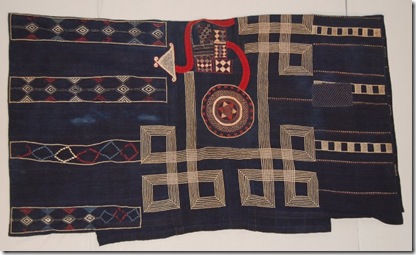
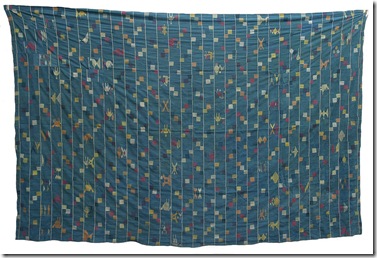
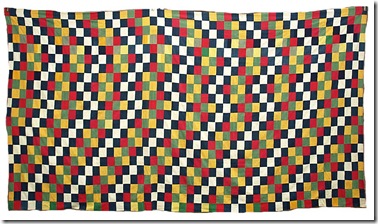
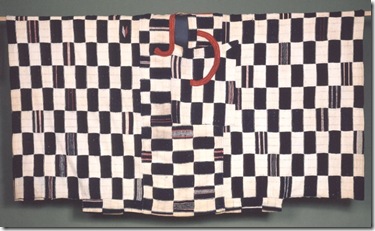
We are having a sale of old stock, with cloths from Nigeria, Ghana, Senegal, Ivory Coast, Burkina Faso etc. All pieces are priced at GBP50, US$85, or Euro 60 plus shipping. 10% additional discount if you buy 2 or more pieces from this group. Images are online here: Sale Gallery

Friday, 12 March 2010

West African Robes in the British Museum collection

AN00318636_001_l

This rare Liberian robe acquired by the British Museum from Henry Christy in the 1860s (click on the photo for more details) is one highlight among many of what must surely be the world’s most comprehensive and important collection of West African robes. Already numbering several hundred items it was recently augmented by the purchase of the Heathcote collection from David Heathcote, the scholar of Hausa embroidery (search the database using his name in the “Provenance” field to bring up 390 items in this collection, including robes, hats, trousers, embroidery samples etc. ) Derived from north African prototypes these robes are historically linked to the spread of Islam throughout much of West Africa in the course of the 2nd millennium C.E. Together with the related crafts of embroidery and narrow strip loom weaving their distribution closely followed patterns of long distance trade that were dominated by Muslim members of such peoples as the Mande and Hausa. (The relationship between narrow strip weaving and Islam in West Africa is a complex one that I may address in a later post.) Called boubou in Francophone literature and tobe in early Anglophone travellers’ reports, these elaborate man’s gowns were much admired by European visitors to the region and many early examples have found their way to the British Museum.
AN00507003_001_l

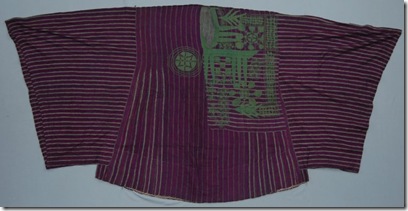
The best known regional style of robe tailoring and embroidery was the embroidered “riga” associated with the C19th Sokoto Caliphate in northern Nigeria although it had, and in modern versions still has, a much wider distribution as an important style of male prestige dress across a large area of West Africa. The example shown above was woven from magenta dyed waste silk (alharini in Hausa, alaari in Yoruba) from the trans-Saharan trade and was part of the late C19th Beving collection. It retains an early label reading: 'Gown made from strips woven on a narrow loom with European waste silk yarns. Embroidered round neck with green European thread. Lined throughout with strips of native woven cloth of indigo and white yarns and around the hem with native woven cloths of grey waste silk yarns.' Throughout the Hausa, Nupe and Yoruba regions of Nigeria magenta silk formed a key component of a triumvirate of prestige fabrics along with beige local wild silk (Hausa tsamiya, Yoruba sanyan) and a fine indigo dyed check or plaid (Hausa saki, Yoruba etu.) Among the many early examples in the British Museum collection the three saki robes below show increasing degrees of elaboration in the classic Nigerian embroidery design known as “eight knives” (Hausa aska takwas.) [click on photos to go to the object records.]

AN00569540_001_l

AN00740592_001_l

AN00517214_001_l

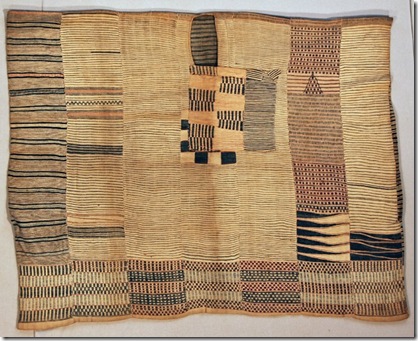
The British Museum collection is also rich in more rare robe styles, several examples of which we show below.

Boubou tilbi, Djenne region, Mali

AN00742490_001_l

Boubou lomasa, Soninke people, Mali

AN00591368_001_l

Boubou Manding, Liberia/Sierra Leone

AN00412413_001_l

AN00535202_001_l

Sierra Leone, Mende or Sherbro people
AN00412685_001_l

For more information on West African robes consult the following sources:

Gardi,B. Le Boubou - c'est chic. (2002) – a superb and beautiful book.

Gardi,B. "La broderie" in Bedaux, R. & van der Waals, J. eds Djenné: une ville millénaire au Mali (1994)

Heathcote, D. "Aspects of Embroidery in Nigeria" in Picton,J. ed. The Art of African Textiles (1995) -see bibliography for Heathcot's numerous other articles on Hausa embroidery.

Perani,J. "The Cloth Connection: Patrons and Producers of Hausa and Nupe Prestige Strip-Weave"in History, Design, and Craft in West African Strip-Woven Cloth (1992)

Perani,J. & Wolff,N. "Embroidered Gowns and Equestrian Ensembles of the Kano Aristocracy." in African Arts 25(3) (1992)

Prussin, L. Hatumere: Islamic Design in West Africa (1986) Chapter 8

Worden, S. "Prestige Robes of the Hausa-Fulani in Liverpool Museum" in Text 30 (2002)

To see our some of our current stock, which primarily consists of early Nigerian robes, click here.

Wednesday, 24 February 2010

Fante Asafo Flag gallery returns

asafo060small

Our gallery of Fante Asafo flags is back online here after some months hiatus. We now have a superb selection of genuine flags drawn in part from a major private collection assembled in the 1980s and early 90s, and in part from our own contacts in Ghana over recent years. For information on distinguishing these scarce authentic flags from the modern copies widely available on the net see my earlier post here.

Saturday, 13 February 2010

Indigo in West Africa – an introduction

segou Dried balls of indigo on sale in the market at Segou, Mali, early C20th. Vintage postcard, circa 1910, authors collection.

Indigo was the foundation of numerous textile traditions throughout West Africa. For centuries before the introduction of synthetic dyes the ability to transform everyday white cotton into prized deep blue cloth was a mysterious and highly valuable skill passed on by specialist dyers from generation to generation. From the Tuareg nomads of the Sahara to the grassland kingdoms of Cameroon, indigo cloth signified wealth, abundance and fertility. A century ago blue and white striped cloth was the normal attire across a vast area from Senegal to Cameroon, while numerous traditions of "shibori" type resist pattern dyeing flourished. Indigo in West Africa was obtained from local plant sources, either indigofera or lonchocarpus cyanescans. Transforming the raw material into a successful dye vat was a complex process requiring great expertise and liable to unexplained failure. Inevitably it was usually surrounded with ritual prescriptions and prohibitions. The primary ingredients were dried balls of crushed leaves from indigo bearing plants, ash, and the dried residue from old vats. Cloth had to be dipped repeatedly in the fermented dye, exposed briefly to the air, then re-immersed. The number of dippings, and the strength and freshness of the dye determined the intensity of the resulting colour.

yoruba A rare early C20th image of Yoruba women dyers with their clay dye pots. Vintage postcard, circa 1910, authors collection.

Appropriately it was women who dyed cloth with indigo in most areas, with the Yoruba of Nigeria and the Manding of Mali (especially the Soninke /Malinke) particularly well known for their expertise. Yoruba dyers paid tribute to a patron deity, Iya Mapo to ensure the success of the complex dye process.

MALINKES Malinke dyers" old postcard, photograph taken by Edmund Fortier in the Futa Jallon region of Guinee in 1905. Note the use of a half buried pot as the dye vessel, and, at the left, a woman beating folded cloth to impart a glazed sheen.

Among the Hausa, where the export trade in prestige textiles was highly organised, male dyers working at communal dye pits were the basis of the wealth of the ancient city of Kano.

hausa Hausa male dyers in Kano, circa 1950. Note the concrete dyepits sunk in the ground. Vintage postcard, authors collection.

After the dyed cloth had dried it was customary to beat the fabric repeatedly with wooden beaters, which both pressed the fabric and imparted a shiny glaze. In some areas additional indigo paste was beaten into the cloth at this stage, subsequently rubbing off on the skin of the wearer in a much desired effect.

kura12 Cloth beaters at work in the village of Kura near Kano, 2005. Author’s photo.

Today synthetic indigo and brightly coloured imported fabrics have largely displaced natural indigo except in remote regions and only in a few areas can one still see indigo cloths in regular use. For many cloths like those in our galleries dating from the early to mid-twentieth century represent the last remainders of a long tradition. Elsewhere though natural indigo continues to be used, for example by Dogon women in Mali and Mossi and Dioula in Burkina Faso. We have two selections of indigo dyed textiles, in our indigo gallery and our Nigerian adire resist dyed gallery, and other indigo dyed cloths available in our Francophone and Nigerian women's galleries.

Monday, 8 February 2010

Some more Ewe cloths….

ewedetail1 ewedetail2 ewedetail3
ewedetail4 ewedetail5 ewedetail6
ewedetail7 ewedetail8 ewedetail9

Details from Ewe484 – click to enlarge.

Ewe484

CODE# E484
PRICE : Email us for price
MEASURES: 112ins x 75, 283cm x 190
The supplementary weft float motifs on this cloth are exceptionally complex composite images combining two or three objects or animals and people with objects in a manner that I have no previously seen. The very neatly woven designs are framed within white weft faced stripes and rows of square blocks on a solid green ground. The cloth has a couple of patches near top left corner in the photo but otherwise is in very good condition.  Dates from circa 1920-50.

Ewe525

CODE# E525

PRICE Email us for price

MEASURES: 119ins x 69, 303cm x 176

Superb, elaborate  and complex Ewe chief's cloth with a variety of  supplementary weft float motifs including people, birds, animals, swords, geometric designs etc, alternating with square weft faced blocks.  One of the finest Ewe pieces we have collected in recent years. Parts of some of the weft motifs have worn away and a there are a few repairs but this remains an exceptional piece. Dates from circa 1900-20s. 

Ewe518

CODE# E518
PRICE : Email us for price
MEASURES: 126ins x 71, 320cm x 180
Fine example of the weft faced "checkerboard" style of Ewe cotton man's cloth, with a soft well used feel and typical heavy weight of cloth. The addition of yellow is unusual in this style of Ewe cloth and adds a vibrancy to the design. Exceptionally for this type of cloth this example is complete and intact with no missing strips or repairs. In excellent condition and dating from early C20th.
    

For a wide selection of Ewe cloths, including smaller women’s cloths, click here to go to our website.

Monday, 1 February 2010

African Lace – forthcoming exhibition

Image4

Advance notice of an interesting exhibition. From October 2010 to January 2011 the Ethnology Museum in Vienna will have a major exhibition on lace fabrics in Nigeria, in collaboration with the National Museum, Lagos. The show will then transfer to Lagos from March to Jun 2011. Austria is a major producer of lace for the West African market. A substantial catalogue in English and German editions will accompany the show. More details later in the year.

Nigeria in Costume

Some plates from “Nigeria in Costume” published by the Shell Company of Nigeria to mark Nigerian Independence in 1960 and with a foreword by the then Prime Minister Sir Abubakar Tafawa Balewa. Fifty years on this book is a very obscure curiosity and I was pleased to find a copy in one of the few surviving bookshops in Charing Cross Road. The plates are of paintings by John Danford.

scan001 A Yoruba oba (king.)
scan002 Festival dress for the Ekong dance, Ibibio
scan003 A District Head - Kano
scan004 The Akpan Masquerade Womens’ Dress - Efik
scan005 Akenzua II – Oba of Benin
scan006 Agbada Dress - Yoruba
scan007 Yoruba Girl
scan008 Chief Ekperegin Olu Warri Osemme of Warri - Urhobo
scan009 Ilorin Weaver
scan010 An Egba Chief wearing the ceremonial dress of the Ogboni fraternity - Yoruba